Cloud-native is a term used to describe container-based environments. Cloud-native technologies are used to develop applications built with services packaged in containers, deployed as microservices, and managed on elastic infrastructure through agile DevOps processes and continuous delivery workflows.
Cloud Native Computing Foundation (CNCF), launched in 2015 by the Linux Foundation.
What is Cloud?
- remote data centers
- offers software or hardware to a business or individual
- you can access it through the Internet
Why business is moving to the Cloud?
- Flexibility and agility
Cloud computing makes it easy to quickly scale up/down the capacity. - Security
Implement effective disaster recovery solutions without large, upfront investments. - Automatic software and hardware updates
The servers are maintained by your supplier. - Saves money on hardware, “pay as you go”
- Increased collaboration
Team members can work anywhere. - Сompetitive advantage
Small businesses have access to enterprise-class technology they couldn’t afford on their own.
Choose your service model
- How much you can and want to manage yourself?
- How much you want your service provider to manage?
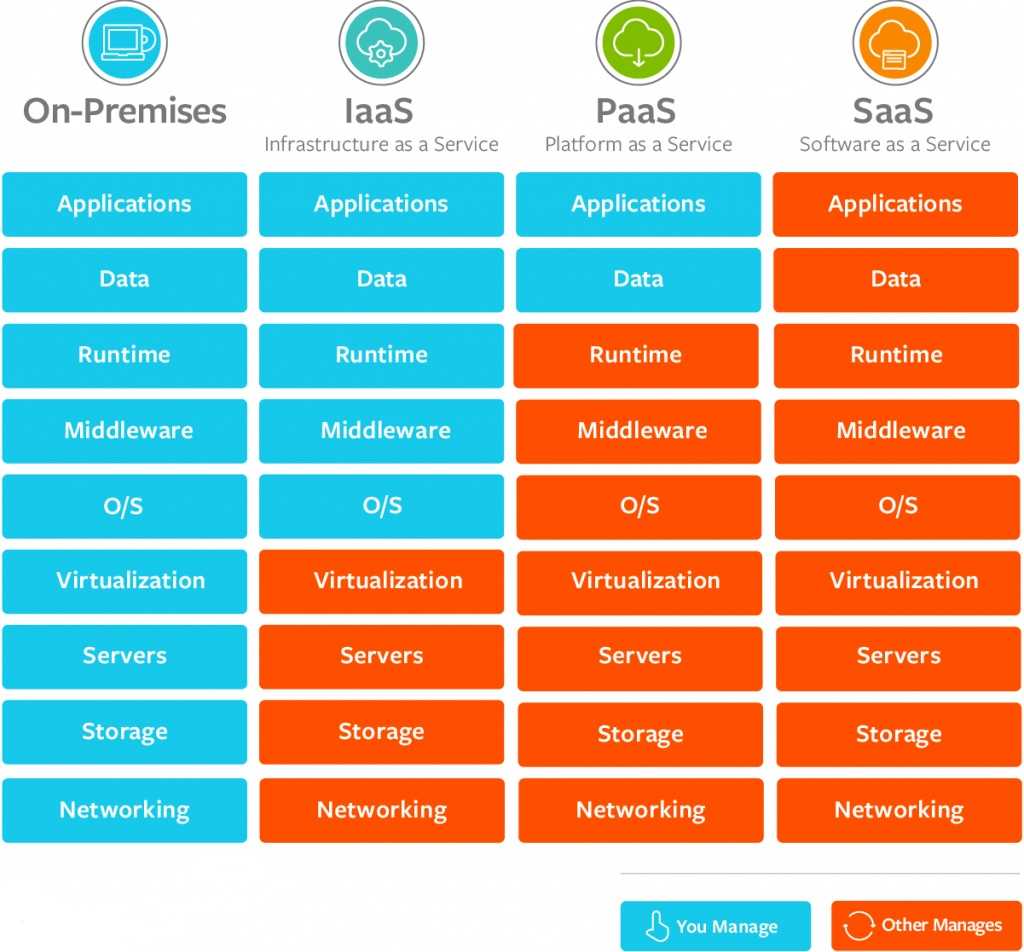
Match services yourself: DigitalOcean, Wix, Heroku, Shopify, Amazon Web Services (AWS), Salesforce, Google Cloud Platform (GCP), GitHub, Youtube, GitLab, Travis CI, IBM cloud, Trello.
What are cloud-native applications?
Cloud-native applications are:
- a collection of small, independent, and loosely coupled services
- providing a consistent development and automated management
- designed to run in the cloud.
Key attributes of cloud-native:
- Packaged as lightweight containers
- Developed with best-of-breed languages and frameworks
- Designed as loosely coupled microservices
Other attributes:
- Centered around APIs for interaction and collaboration
- Architected with a clean separation of stateless and stateful services
- Isolated from the server and operating system dependencies
- Deployed on self-service, elastic, cloud infrastructure
- Managed through agile DevOps processes
Each service has an independent life cycle and CI/CD. - Automated capabilities
- Defined, policy-driven resource allocation
Monolithic vs Microservices architecture
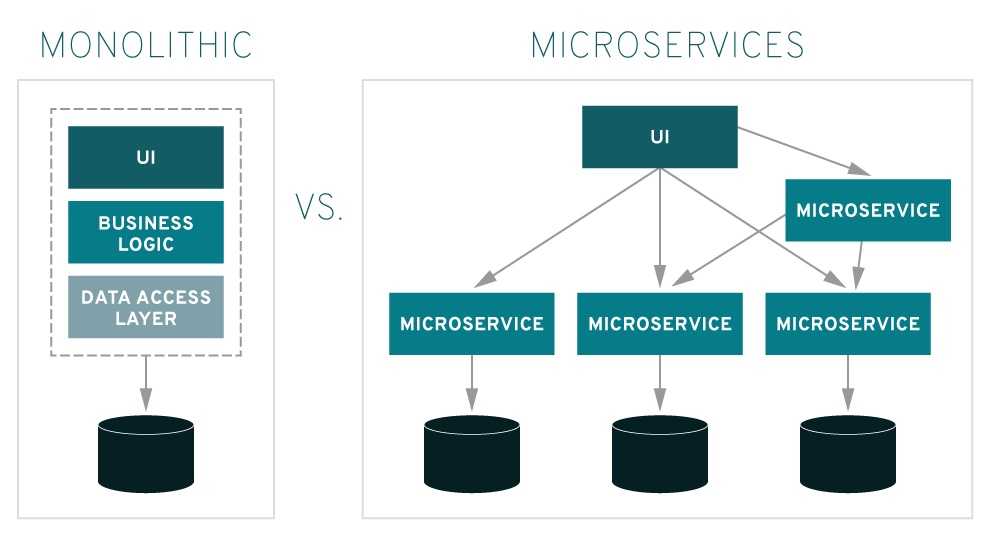
Microservices - a style that structures an application as a collection of services that are:
- highly maintainable and testable
- loosely coupled
- independently deployable
- organized around business capabilities
- owned by a small team
- sourced as a separate Git repo with its tests
Monolithic - a style where a single-tiered software application in which different components are combined into a single program from a single platform.
Microservices are NOT
Your SOA (service-oriented architecture) cut into services
Anything involving a large framework
What part of "micro" are folks missing?Development patterns where you deploy things into containers
You want containers, do containers. Fine with me. Deployment decisions have nothing to do with microservices. If you're coupling your code to the architecture that tightly, re-read #2.Things with some cool language
Once again, if you like cool languages, use them. Sounds fun. It's just has nothing to do with microservices.Systems with thousands of little tiny pieces of code scattered all over the place making it impossible to reason about anything You're loving the idea to death. You've gone too far the other way. Both the "micro" and "service" part are equally important.
Application centered around APIs
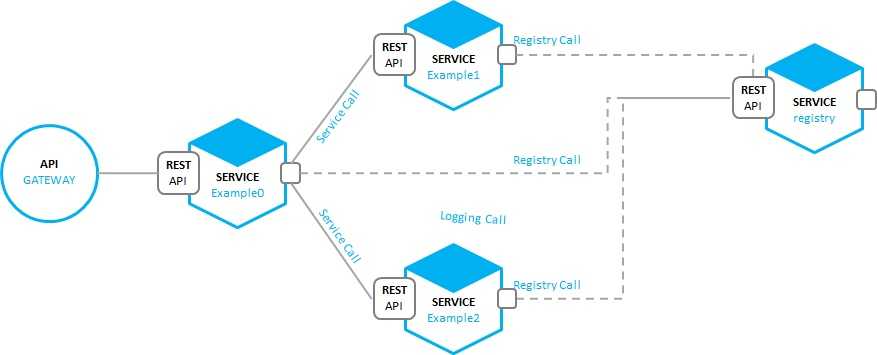
Service mesh
Service mesh - an infrastructure layer for facilitating service-to-service communications between microservices, often using a sidecar proxy.
Provides:
- Connection between microservices
- Monitoring, observability into communications
- Securing
- Managing
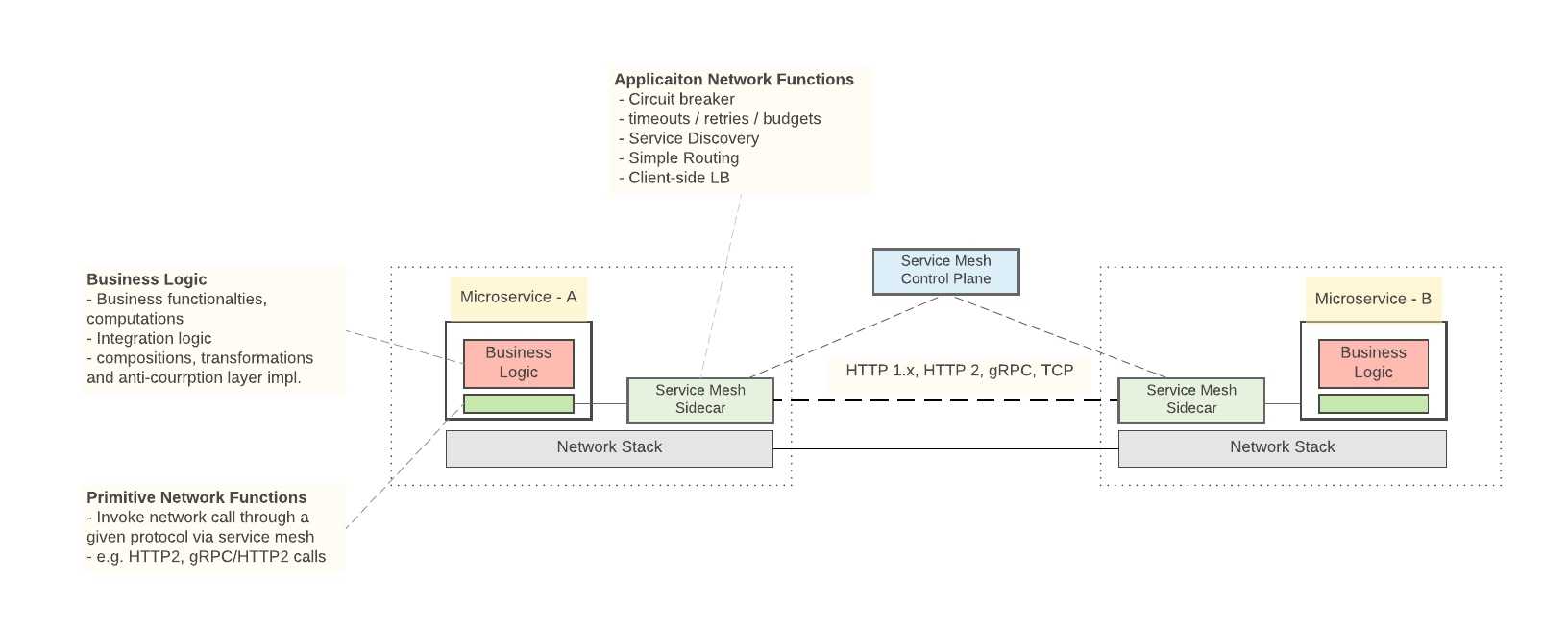
Service mesh architecture
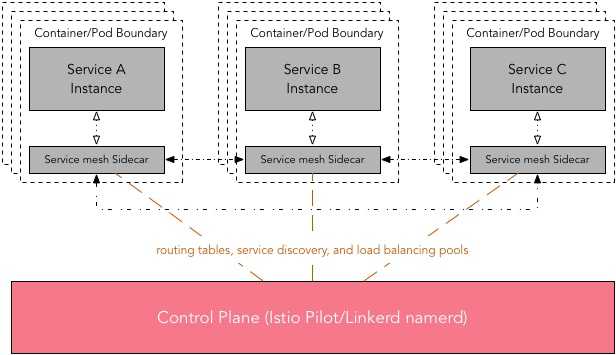
Platforms implementing service mesh:
- Istio
- Consul
- Linkerd
Service mesh example
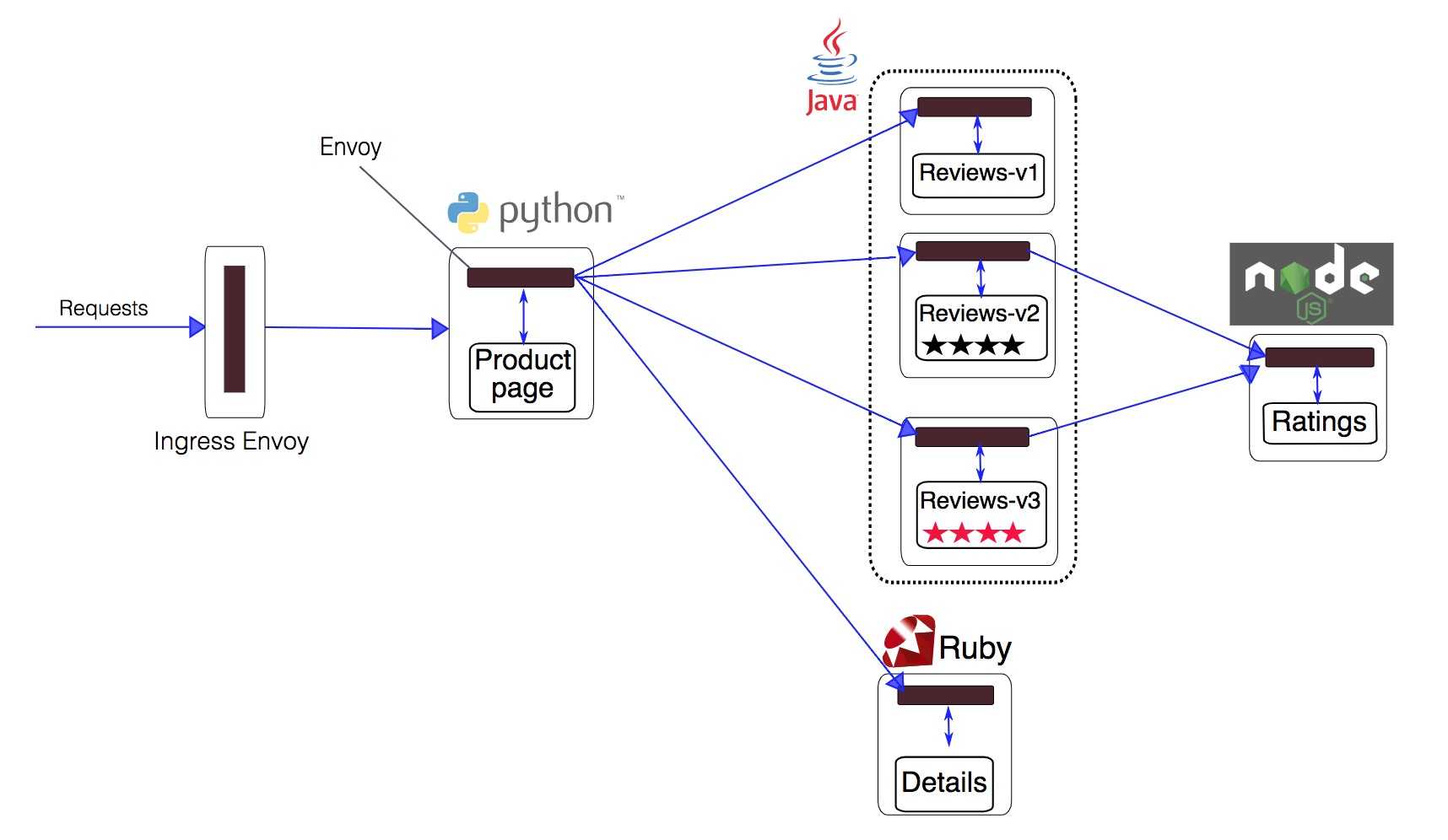
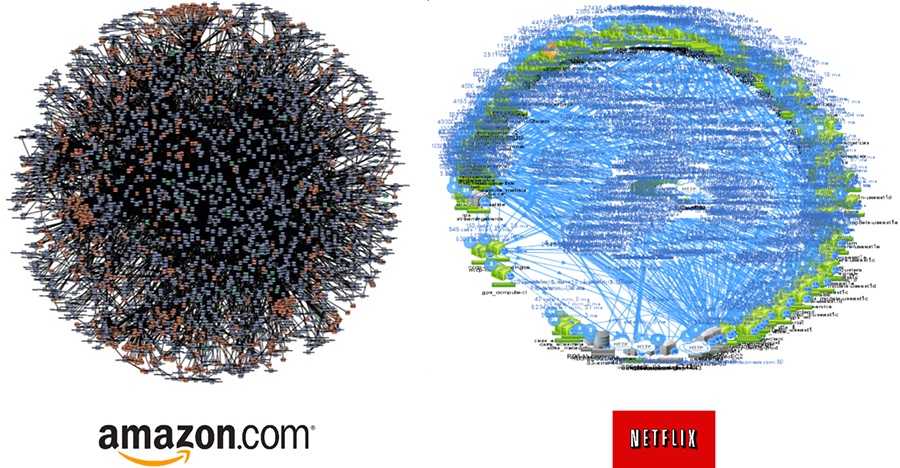
Real large examples of service mesh
Istio
Istio - a platform that implements service mesh (provides a uniform way to secure, connect, and monitor microservices).
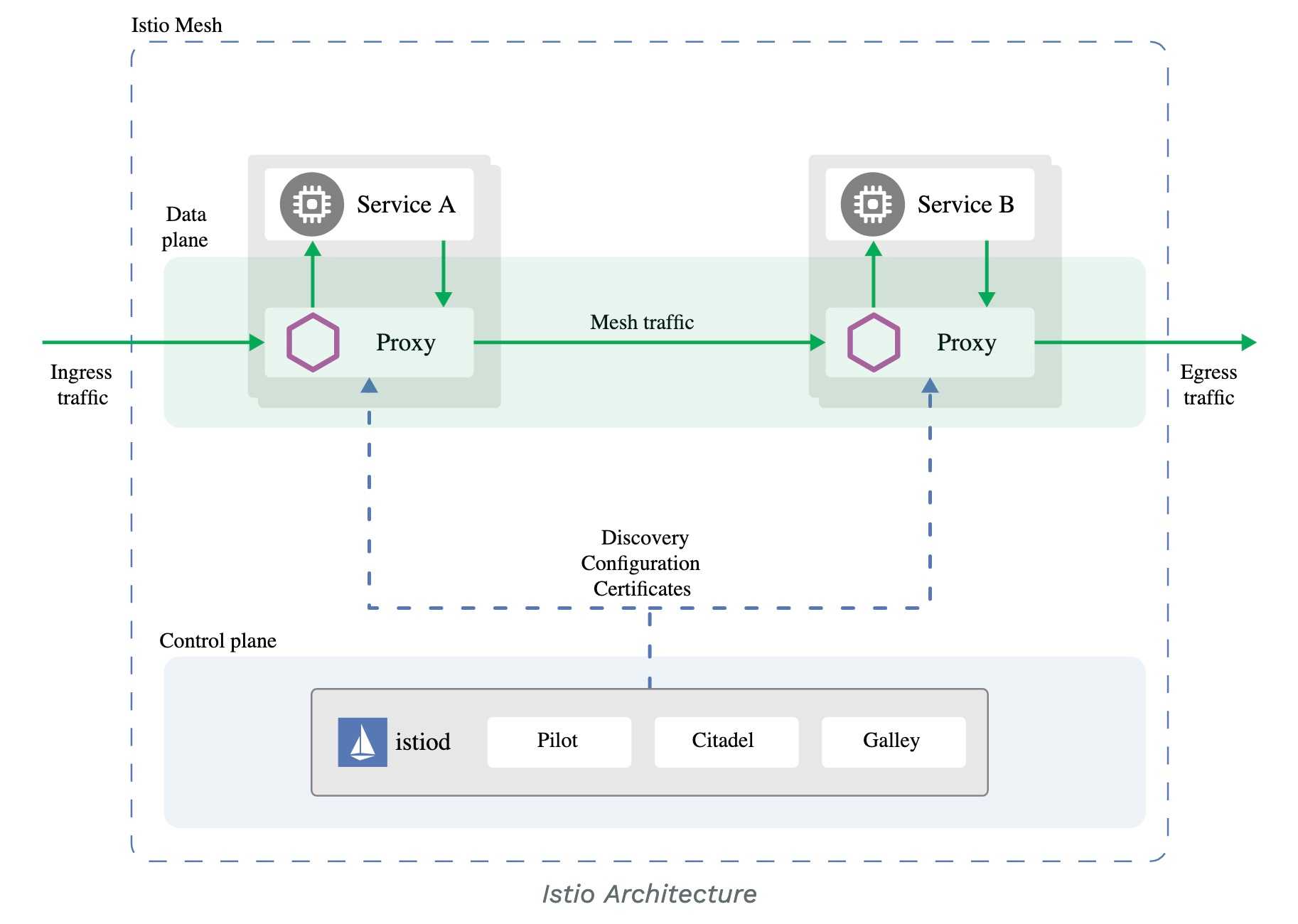
What can you do with Istio?
Istio provides operational requirements:
- canary rollout (deployment)
- A/B testing
- rate-limiting
- access control
- end-to-end authentication